
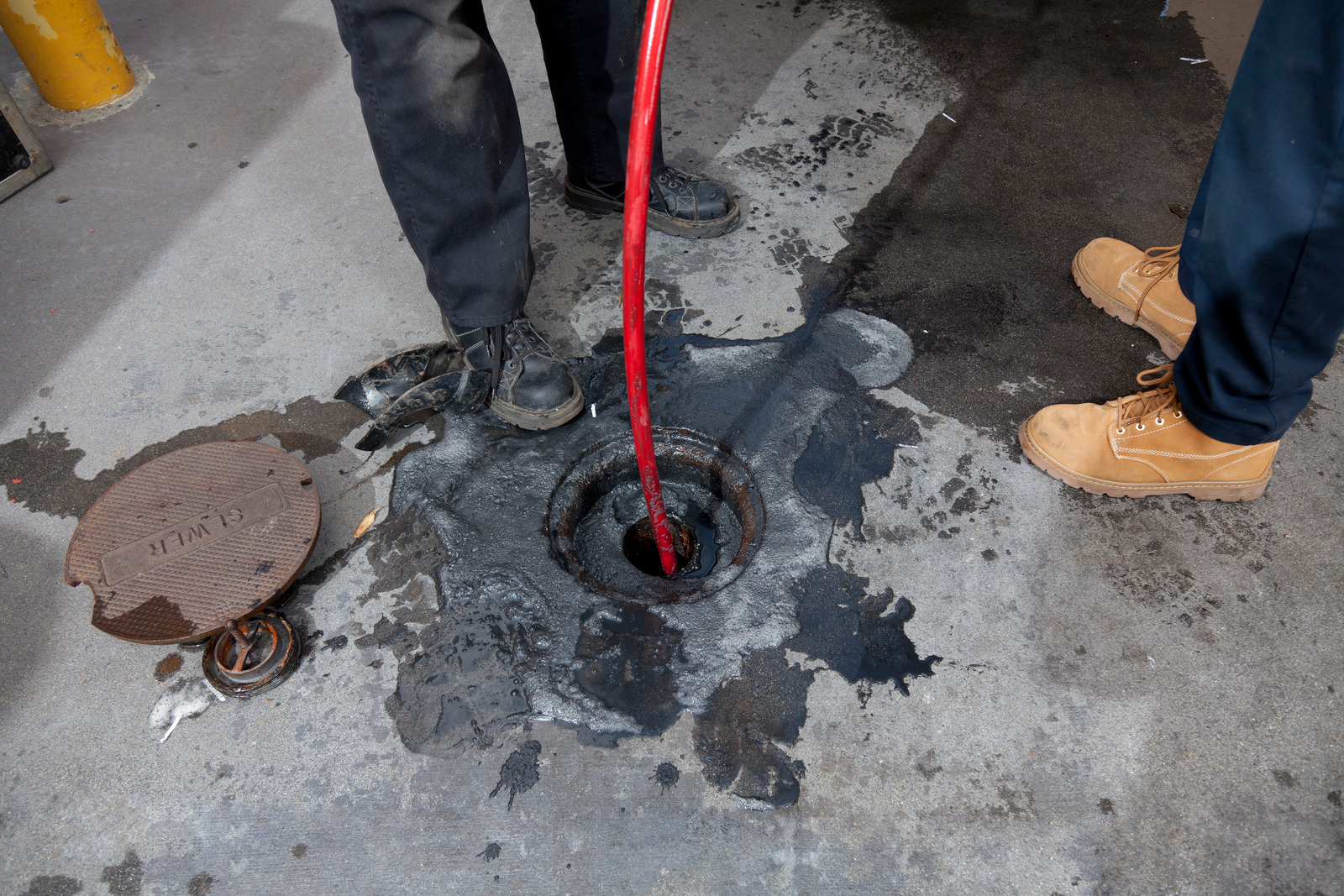
Blocked drains don’t give warnings. One minute everything’s fine. Next, the kitchen floor is wet and the staff are scrambling. For facilities that depend on Commercial Grease Trap Pumping, drainage problems aren’t minor inconveniences, they’re operational risks. Restaurants, hotels, hospitals, food production sites, they can’t afford shutdowns over grease buildup. So when drains start slowing down, the debate usually comes up: stick with traditional snaking, or move to hydro jetting? Let’s break it down in plain terms.
Why Commercial Drains Clog So Fast
Commercial plumbing works harder than residential systems. Way harder. In busy kitchens, fats, oils, and grease (FOG) go down drains every single day. Even with proper Commercial Grease Trap Pumping, small amounts of grease slip through. Over time, that grease sticks to pipe walls. Then food particles cling to it. Then scale builds up. It snowballs. According to municipal wastewater data, grease is one of the leading causes of sewer overflows nationwide. Not just in restaurants. In commercial buildings across the board. And once buildup thickens, basic fixes don’t always cut it.
Traditional Drain Cleaning: What It Really Does
Traditional drain cleaning usually means:
- Drain snaking
- Mechanical augers
- Rodding equipment
It breaks through the blockage. Creates an opening. Water flows again. Quick fix. Lower upfront cost. That’s why many businesses default to it. But here’s the thing. It often punches a hole through the clog instead of fully removing it. Picture drilling through packed mud. The tunnel opens, but the mud stays. That leftover grease becomes a base layer for the next clog. And in high-use facilities, that next clog may not be far away. Still, for small or isolated blockages, traditional cleaning works fine.
Hydro Jetting: A Deeper Clean
Hydro Jetting Services take a different approach. Instead of cutting through the blockage, they blast the inside of pipes with high-pressure water often up to 4,000 PSI.
That pressure scrubs the pipe walls. It removes:
- Thick grease layers
- Sludge buildup
- Mineral scaling
- Food debris
- Even minor root intrusion
The goal isn’t just flow restoration. It’s pipe restoration. For properties already investing in routine Commercial Grease Trap Pumping, hydro jetting works as a secondary defense. The trap handles captured grease. Jetting handles what escapes downstream. It’s more thorough. No way around that.
Cost: Short-Term vs Long-Term
Upfront, traditional snaking is cheaper. No debate there. But cost per visit doesn’t always reflect total cost over time. If a facility needs drain clearing every two or three months, expenses stack up fast. Not to mention staff disruption and potential after-hours emergency fees. Many commercial properties that shift to scheduled Hydro Jetting Services report fewer emergency calls over the year. Fewer surprises. More predictable maintenance. It’s not about hype. It’s about reducing repeat problems.
Safety and Pipe Condition
Hydro jetting is powerful. That makes some property managers nervous. In reality, when performed by trained technicians, Hydro Jetting Services are safe for most commercial plumbing systems, including PVC and cast iron. A camera inspection beforehand is usually recommended, especially for older buildings. If pipes are severely damaged, repairs may be necessary first. But in structurally sound systems, jetting doesn’t harm the line, it cleans it. Traditional snaking, while gentler, can sometimes scratch or stress pipes if misused. No method is risk-free. Proper inspection matters either way.
Compliance and Health Concerns
Commercial kitchens operate under health department scrutiny. Backups, odors, or grease overflow can lead to citations. Routine Commercial Grease Trap Pumping is essential for compliance. But grease doesn’t always stay confined to the trap. It travels. Slowly. Quietly. Hydro jetting reduces that risk by clearing the lines beyond the trap. For high-volume food operations, that added protection can make inspections less stressful. And honestly, avoiding one shutdown often justifies the cost.
When Traditional Cleaning Is Enough
It still has a place.
Traditional methods make sense for:
- Minor, isolated clogs
- Office buildings with low grease output
- Temporary emergency relief
- Fragile or aging pipe systems awaiting repair
If drain issues are rare, there may be no need to escalate immediately.
When Hydro Jetting Makes More Sense
Hydro jetting tends to be the better fit for:
- Recurring grease-related backups
- Restaurants serving high daily volume
- Facilities with past FOG violations
- Preventive maintenance programs
Businesses already scheduling consistent Commercial Grease Trap Pumping often see stronger results when pairing it with periodic jetting. The combination tackles both collection and downstream buildup. It’s layered maintenance. Not reactive scrambling.
A Real-World Pattern
Consider a busy commercial kitchen serving hundreds of meals daily. Despite regular grease trap service, drains slow every few months. Snaking clears it. For a while. After shifting to biannual Hydro Jetting Services alongside scheduled Commercial Grease Trap Pumping, emergency plumbing calls decrease noticeably over the next year. Staff report fewer slow drains. Maintenance becomes scheduled instead of urgent. No dramatic claims. Just fewer interruptions.
The Bottom Line
Traditional drain cleaning solves the immediate problem. Hydro jetting addresses the deeper one. For low-traffic properties, snaking may be enough. For grease-heavy operations, relying only on surface-level clearing can turn into a cycle of repeat service calls. Most commercial facilities benefit from a balanced approach:
- Routine Commercial Grease Trap Pumping
- Scheduled inspections
- Preventive Hydro Jetting Services
- Traditional cleaning for isolated issues
Grease buildup doesn’t disappear on its own. It accumulates. And when it finally causes a blockage, it rarely happens at a convenient time. Preventive maintenance isn’t flashy. But it keeps doors open and operations steady. And for commercial properties, that’s what really matters.
FAQs
1. How often should hydro jetting be scheduled for a commercial kitchen?
Most high-volume kitchens benefit from hydro jetting every 6 to 12 months. Frequency depends on grease output and inspection findings.
2. Can hydro jetting replace Commercial Grease Trap Pumping?
No. Commercial Grease Trap Pumping removes grease from the trap itself. Hydro jetting cleans the pipes beyond the trap. Both serve different but complementary roles.
3. Is hydro jetting more expensive than traditional drain cleaning?
Per service, yes. However, Hydro Jetting Services may reduce repeat clogs and emergency calls, which can lower overall annual maintenance costs.