
Water is just sitting there in the sink. Not moving. Dishes piling up on the counter because there’s nowhere to rinse them. That smell started to come up from the drain. Everyone’s been here at some point and it’s genuinely one of the more annoying household problems because it makes the whole kitchen feel unusable until it’s sorted.
Here’s the thing though. Most of the time this is completely fixable without calling anyone. The mistake most people make is either trying the wrong thing first or jumping straight to chemical drain cleaner before trying anything else. Neither of those usually goes well.
Five steps. Start at one. Work through them. Most kitchen sink clogs are cleared somewhere between step two and four.
Know What You’re Dealing With First
Kitchen sink clogs are almost always greased. Not hair, not random debris, grease. Cooking fat and oil goes down the drain, hits the cooler pipe further down, solidifies, and then everything else that gets washed down after it sticks to that grease layer. Food bits. Soap residue. More grease on top of grease. Over weeks it narrows the pipe until water barely moves and then stops altogether.
This is completely different from a bathroom drain clog which is almost always hair. Different material, different approaches work better. Worth knowing before spending twenty minutes on something that wasn’t designed for what’s actually in a kitchen drain.
Step One: Boiling Water
Start here. Every time, no exceptions.
Get the standing water out of the sink first, bucket or cup, whatever works. Boil a full kettle. Pour it down the drain slowly rather than all at once. Wait sixty seconds. Turn on the tap and watch what happens.
Drains partially then backs up again? Do another kettle. Two or three rounds of boiling water melts and flushes a grease clog surprisingly often, especially if it hasn’t been sitting there for months already.
Metal pipes only for this. PVC pipes under the sink, use very hot tap water instead. Boiling water softens PVC fittings over time and a leaking pipe connection is considerably worse than where things started.
Step Two: Dish Soap and Hot Water
Boiling water alone didn’t do it. Add dish soap.
Makes complete sense when thought about for a second. Dish soap exists specifically to cut through grease. Grease is what’s in the pipe. So pour a genuinely generous amount of dish soap directly down the drain, more than seems necessary, follow it with hot water from the tap, and let it sit for a few minutes before flushing with more hot water.
Simple as that. On moderate clogs this clears things completely. On more stubborn ones it softens the grease enough that the next step does the rest.
Step Three: Baking Soda and Vinegar
Everyone’s heard of this combination and kind of assumes it’s one of those home remedy things that doesn’t really work. For kitchen clogs specifically it actually does though, because the fizzing reaction breaks down grease and organic buildup in a way plain water can’t.
Half a cup of baking soda down the drain. Half a cup of white vinegar right after. Fizzing starts immediately. Cover the drain opening right now, stopper or a cloth, doesn’t matter what, to push that reaction down into the pipe instead of letting it bubble up and escape out the top pointlessly. Leave it fifteen to twenty minutes. Hot water flush after.
Safer on pipes than chemical drain cleaners. Works on septic systems. Genuinely effective on what’s actually in a clogged kitchen sink. Do this before buying anything from the hardware store.
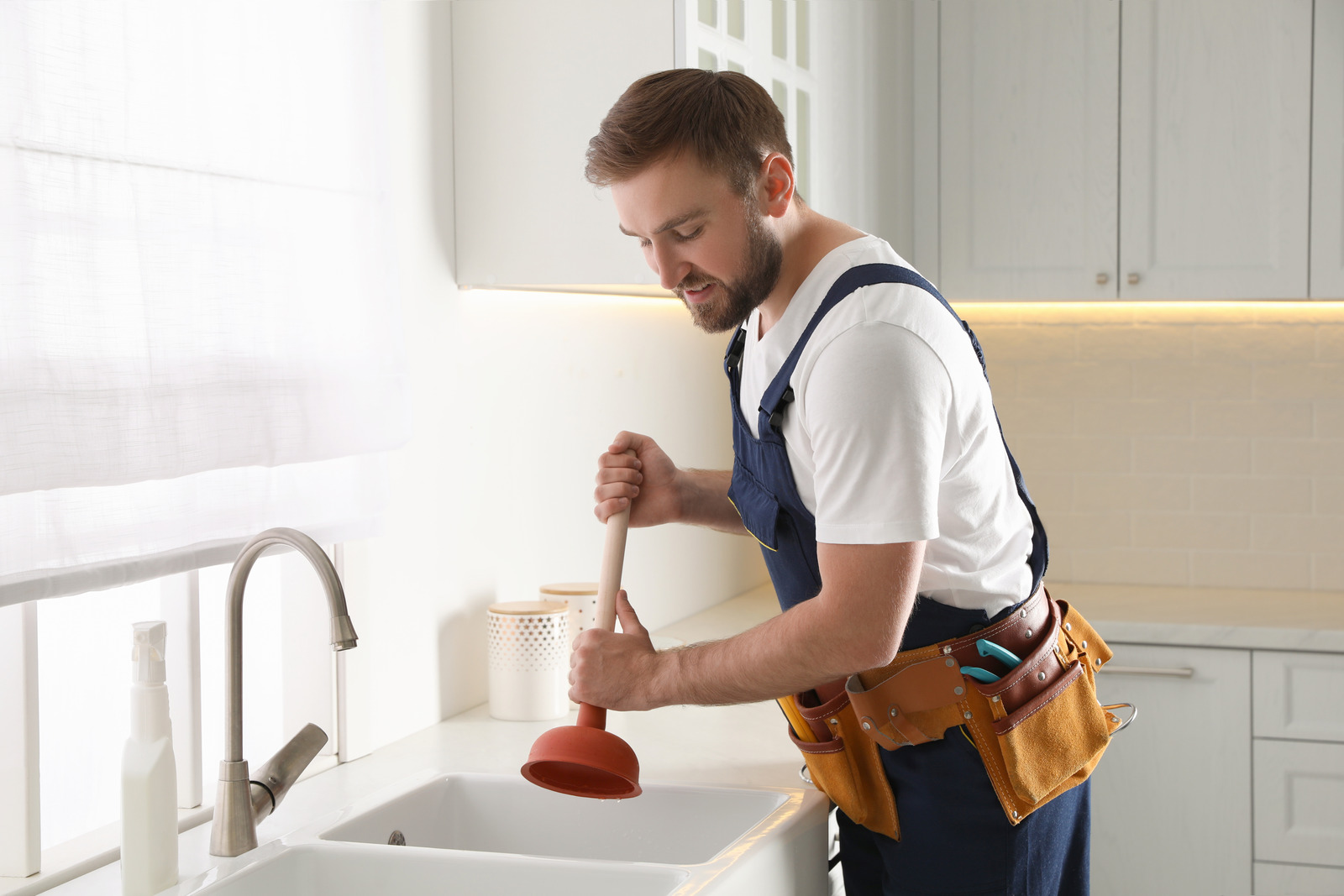
Step Four: Plunger
Not cleared yet. Plunger.
Most people skip straight to chemical products here and that’s usually the wrong move. A plunger on a grease clog that’s been softened by the previous steps is more effective than most people expect because the pressure changes physically dislodge what the liquids loosened but didn’t fully clear.
Enough water in the sink to cover the plunger cup. Firm seal over the drain. Push down firmly, yank up sharply, repeat several times quickly. That’s it.
Double sink, plug the second drain opening first otherwise all the pressure just goes out that way and nothing happens at the actual clog.
Genuinely this is where most clogged kitchen sink situations actually get resolved. Earlier steps do the softening. Plunger does the shifting. They work together.
Step Five: P-Trap
Done all four steps and water still isn’t moving. The clog is in the P-trap, the curved pipe section visible right under the sink.
Bucket underneath before anything else, this part is important. Most P-traps unscrew by hand or with a basic wrench. No specialized tools. Unscrew both slip nuts on either side of the curved section and pull it out over the bucket. Clean out whatever’s in there.
Sometimes the buildup inside the P-trap is substantial and it’s the entire reason nothing from above made any difference. Reattach it, run water, check for drips at the connections.
Lots of clogged kitchen sink situations that seem complicated end up being entirely in here. Five minutes to check before calling anyone.
When to Actually Call a Local Plumber for a Clogged Sink
All five steps done and still not draining. The clog is further down the line than any of this reaches. Call a local plumber for a clogged sink rather than keep trying things that aren’t getting there.
Signs it’s a main line problem rather than just the kitchen drain: water backing up in multiple fixtures at once, gurgling from other drains when the sink runs, drain clearing for an hour then slowing again. Plumber has drain snaking equipment and camera tools that reach where none of this does.
When It’s an Emergency
Most kitchen sink situations can wait for a regular appointment. Some can’t. Water backing up into multiple drains at the same time. Sewage smell coming up through the sink. Any risk of overflow onto floors or into cabinets.
Those situations need a 24/7 emergency plumber right now rather than Monday morning. Water damage from a backed-up main line builds up fast and costs way more than an after-hours call would have.
That’s Really It
Grease. Almost always grease. Almost always responds to these five steps tried in order. Boiling water, dish soap, baking soda and vinegar, plunger, P-trap. Gone by step four most of the time. The ones that don’t need a local plumber for a clogged sink to look further down. And anything affecting multiple drains or creating overflow risk is a 24/7 emergency plumber situation, not a wait and see one.
Frequently Asked Questions
Why does my kitchen sink keep blocking up even after I fix it?
Almost always means grease is building up faster than it’s getting cleared, or something deeper in the line keeps catching debris. Running hot water and dish soap down the drain regularly after greasy washing up helps slow it down. A local plumber for a clogged sink can check whether something further down is causing it to keep coming back.
Do chemical drain cleaners actually work on a kitchen sink clog?
Sometimes but they come with real downsides. Repeated use damages older pipes, they harm septic systems, and mixing them accidentally with other products creates genuinely hazardous reactions. Baking soda and vinegar works on grease-based clogs without any of those risks. Try that first before spending money on anything chemical.
When does a blocked kitchen sink actually need a 24/7 emergency plumber?
When water is coming up in multiple fixtures at the same time, when there’s a sewage smell through the drain, or when there’s any chance of water overflowing onto the floor or into the cabinets underneath. These situations need professional attention immediately rather than more DIY attempts that won’t reach where the actual blockage is.
What actually stops a kitchen sink from blocking up all the time?
Stop putting cooking fat and oil down the drain, it solidifies in the pipe and catches everything else. Run hot water for thirty seconds after washing greasy pans. Put a strainer over the drain to catch food. Once a month do the baking soda and vinegar flush to keep buildup from getting to the point of a full blockage.