
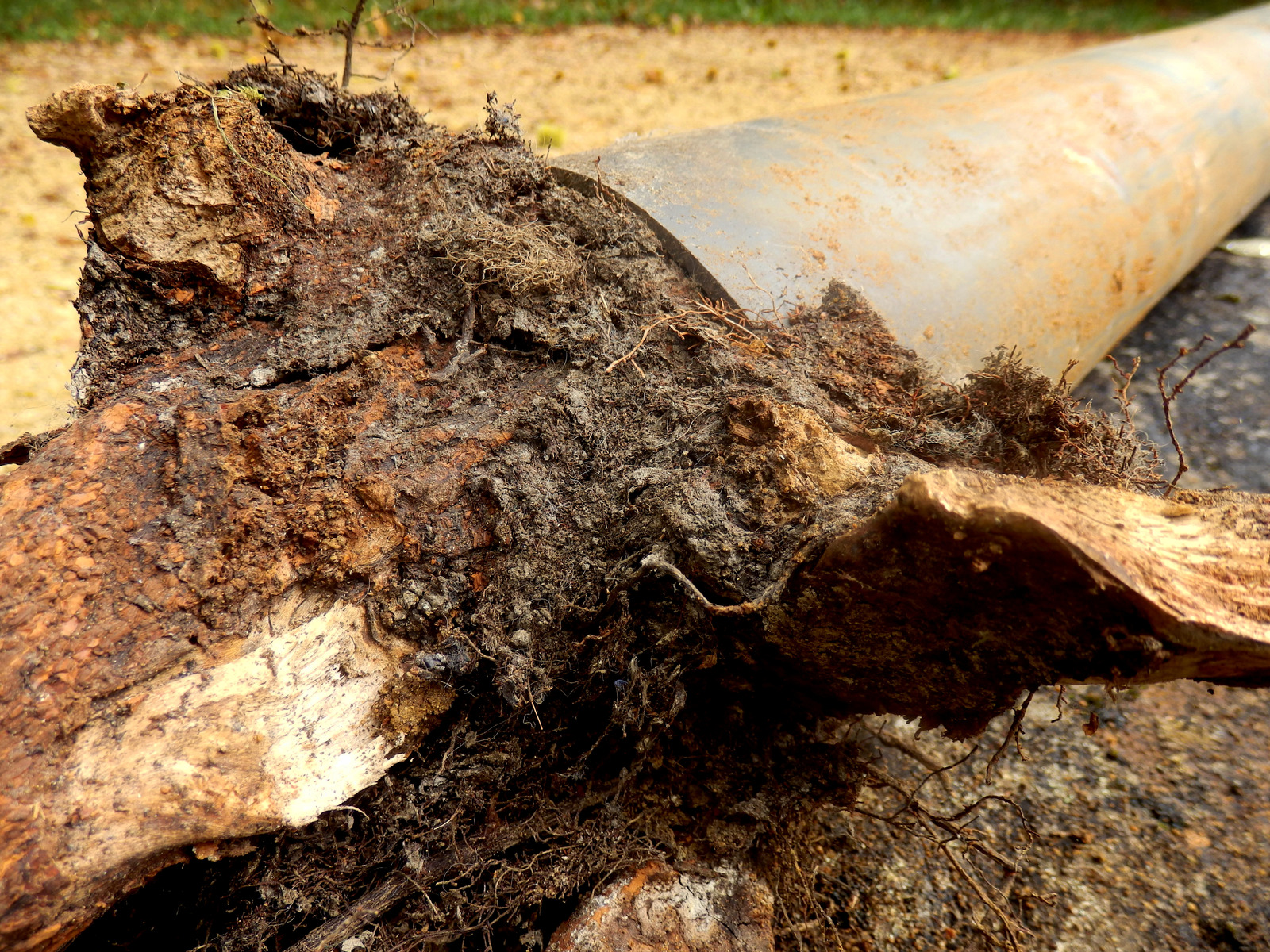
Sewer line that keeps backing up. Drain that runs slow no matter how many times it gets cleared. Annual service call that’s become so routine it’s practically on the calendar. These patterns almost always have the same explanation sitting underground, invisible until a camera goes in and shows exactly what’s been building up over years.
Tree root intrusion into sewer lines is one of the more consistent plumbing problems in older neighbourhoods, and root cutting is the most direct response to it. Not a permanent fix, which is worth understanding clearly going in, but a necessary intervention that restores function, prevents damage from progressing, and buys time for the longer-term decisions about what to do with the line.
This post covers what root cutting actually involves, how it differs from other approaches, when it’s the right response versus when something more significant is needed, and how to manage the situation after cutting so the cycle doesn’t just repeat on the same timeline.
How Root Intrusion Gets to the Point Where Cutting Is Needed
The process is slow enough that most homeowners don’t notice it happening until the symptoms are significant.
Tree roots seek moisture and nutrients in the soil. Sewer pipes, which carry warm wastewater continuously, create exactly the concentration of both that roots are drawn toward. Older clay and concrete sewer pipes have joints every few feet, and those joints develop small gaps over decades of ground movement and material aging. Root filaments find those gaps, sometimes hair-thin at first, and enter the pipe.
Once inside, conditions are ideal for growth. Warmth, moisture, nutrients, space. Root systems inside sewer pipes grow substantially faster than the same roots would in compacted soil. What was a small intrusion becomes a mass of roots that catches toilet paper, grease, and debris with every flush.
By the time the symptoms become obvious, the roots inside the pipe are usually well-established. This is when sewer pipe root removal becomes necessary rather than something to consider.
What Root Cutting Actually Is
Root cutting uses a rotating cable with a cutting head, fed into the sewer line through a cleanout access point, to mechanically cut through and remove the root mass inside the pipe.
The cable is flexible enough to navigate the curves and bends in a sewer line. The cutting head, available in different configurations for different root densities and pipe sizes, spins as the cable rotates and cuts through roots on contact. The cut root material gets flushed through the line with water during and after the cutting process.
This is what distinguishes root cutting from other drain cleaning methods. Standard drain snaking punches through blockages and may move debris, but it doesn’t effectively cut through established root masses. Hydrojetting, which uses high-pressure water, can dislodge looser root growth but isn’t as effective as mechanical cutting for dense root systems. Tree root cutting specifically targets the root mass with a mechanical cutting action that can handle the density of established intrusions.
The process typically takes longer than standard drain clearing, depending on how extensive the root growth is and how long the affected section of pipe is. For a significant root intrusion in an older clay sewer line, a couple of hours isn’t unusual.
What Cutting Does and Doesn’t Fix
This is the part worth being completely clear about before anyone commits to root cutting as the solution.
Cutting removes the root mass from inside the pipe and restores flow. It does this effectively. After a proper root cutting service, the pipe functions the way it’s supposed to and the drainage problems that brought the situation to attention are resolved.
What it doesn’t do is kill the tree roots. The root system is still there in the soil, still alive, still actively growing toward the same moisture source. The roots were cut inside the pipe, not removed from outside. They will regrow from the cut ends. In most situations without additional treatment, roots regrow to the point of causing problems again within one to three years, sometimes faster in warm conditions or with particularly aggressive tree species.
This is why tree root cutting should be understood as a management approach rather than a resolution. It’s part of an ongoing strategy for a pipe that has established root intrusion, not a one-time fix.
Camera Inspection Before and After Cutting
This matters more than most people realize and it’s worth advocating for if a plumber isn’t already proposing it.
Before cutting, a camera inspection shows exactly where the root intrusion is, how extensive it is, and critically, what condition the pipe itself is in. Roots that have been in a clay pipe for a long time don’t just restrict flow. They can crack and displace pipe sections. If the pipe has structural damage, cutting the roots doesn’t fix that damage, and proceeding with root cutting when pipe replacement is actually needed wastes money.
After cutting, a camera inspection confirms that the roots have been adequately removed and that the pipe is clear. It also shows pipe condition post-clearing, which establishes the baseline for future inspection comparisons.
A plumber who proposes root cutting without camera inspection is doing the job partially. The diagnostic information from imaging is what makes the decision about cutting versus more significant intervention an informed one.
What Happens After Cutting: Managing Regrowth
The interval before roots cause problems again can be extended with chemical treatment after mechanical cutting. This is the approach that makes root cutting more than just a revolving service call.
Copper sulphate, applied to the sewer line after mechanical cutting, is absorbed by root ends and inhibits regrowth. It doesn’t kill the tree or affect roots outside the pipe, but it slows the regrowth rate of the cut roots inside the line. Applied periodically, it can extend the interval between required cutting services meaningfully.
Foaming root killers that coat the interior of the pipe and are absorbed by root ends are another option, and some are specifically formulated to reach roots in the upper sections of the pipe where hydrojetting and flushing alone might not reach.
The combination of sewer pipe root removal followed by chemical treatment is the standard approach for ongoing management of an established root intrusion situation.
When Root Cutting Is Not Enough
There are situations where root cutting is the wrong primary intervention, and identifying these before cutting is where camera inspection earns its cost.
Pipes with displaced sections where the pipe has physically moved out of alignment can’t be effectively addressed by cutting alone. The pipe is broken, not just blocked. Cutting the roots doesn’t reconnect displaced sections.
Pipes with significant cracking, particularly in clay lines where roots have been present for many years, may have structural compromise along much of their length. Cutting restores temporary flow but the underlying structural failure continues.
In these situations, pipe lining or pipe replacement is the appropriate intervention. Pipe lining installs a seamless interior liner that covers the damaged sections and seals the joints that roots were entering through, without excavation. It’s more expensive than cutting but produces a result that doesn’t require ongoing management for root intrusion.
Trenchless pipe replacement, which breaks the old pipe outward while pulling a new pipe through, allows replacement without the excavation costs of traditional methods in situations where the layout allows it.
The decision tree is roughly: if the pipe is structurally sound and the intrusion is manageable, tree root cutting with chemical follow-up is appropriate. If there’s significant structural damage, lining or replacement is the right answer.
The Specific Risk of Delaying Root Cutting
Waiting too long once root intrusion symptoms are present accelerates the damage progression in a predictable way.
An established root mass catches more debris than an empty pipe. The debris accumulation increases the pressure on the root mass and on the pipe walls. In clay pipes especially, the expanded root system exerts physical pressure on the pipe sections, and the larger the root mass gets the more pressure it creates.
Catching root intrusion early, when the roots are present but haven’t yet caused structural damage, is what keeps sewer pipe root removal the simple part of the story rather than the beginning of a more expensive one.
When Cutting Is Appropriate Preventively
This is an underused application of root cutting that’s worth knowing about.
For homes in older neighbourhoods with clay sewer lines and established trees, camera inspection every two to three years even without obvious symptoms can catch root intrusion before it causes problems. Cutting at this early stage is faster, less expensive, and prevents the situation from reaching the point where structural damage accompanies the root growth.
Truth be told, the homeowners who deal with root intrusion most cost-effectively are often the ones who schedule periodic inspection and cutting before symptoms force their hand, rather than the ones who wait until the sewer backs up.
Root cutting is the practical, immediate response to tree root intrusion in sewer lines. It works, it restores function, and when combined with chemical treatment to slow regrowth and followed by periodic inspection, it’s a manageable approach to an ongoing situation. Understanding what it does and doesn’t address, and when camera inspection indicates that something more than cutting is needed, is what makes the difference between managing root intrusion cost-effectively and repeatedly spending money on a problem that’s outgrown the solution being applied to it.
Frequently Asked Questions
How often does sewer pipe root removal need to be done after the first cutting?
Without chemical treatment to slow regrowth, most root intrusion situations require cutting every one to two years as roots regrow from cut ends. Chemical treatment applied after mechanical tree root cutting can extend this interval. The specific regrowth rate depends on tree species, soil conditions, and pipe type, with clay pipes in warm conditions tending toward faster regrowth intervals than PVC pipes.
Is root cutting safe for the sewer pipe itself?
Yes, when done correctly with the appropriate cutting head size for the pipe diameter. A cutting head too large for the pipe diameter can damage pipe walls, which is why matching equipment to the specific pipe is important. Camera inspection before root cutting confirms pipe size and condition so the appropriate equipment gets used rather than applying a one-size approach to a situation it’s not suited for.
Can tree root cutting damage the tree or affect its health?
No, mechanical root cutting inside the sewer pipe doesn’t affect the health of the tree. The root system outside the pipe remains intact. Chemical treatments applied after cutting to slow regrowth inside the pipe are absorbed by the cut root ends inside the pipe and don’t travel in quantities that affect the tree’s overall root system or health above ground.
What’s the difference between root cutting and hydrojetting for sewer pipe root removal?
Root cutting uses a mechanical rotating cutting head to physically cut through established root masses, which is effective for dense intrusions. Hydrojetting uses high-pressure water that can dislodge looser root growth and flush debris but isn’t as effective for dense established root systems that require mechanical cutting action. For significant tree root intrusion, root cutting is typically more effective than hydrojetting alone, though both may be used together.