
Slow drains that keep coming back despite clearing. Gurgling sounds from toilets. A sewer line that seems to block up every few months no matter what gets done about it. These are frustrating patterns and they often have the same cause sitting underneath the yard, invisible and getting worse season by season.
Roots in pipe systems is one of the more common and more destructive plumbing problems homeowners deal with, particularly in older neighbourhoods with established trees and aging sewer infrastructure. The damage doesn’t happen overnight. It builds gradually over years, sometimes decades, until the symptoms become impossible to ignore.
This post covers how tree roots actually get into pipes, why the problem is worse in some situations than others, what the damage looks like by the time it’s discovered, and what actually prevents and addresses it.
Why Tree Roots Are Drawn to Sewer Pipes Specifically
Understanding the mechanism explains why this problem is so common and so predictable.
Sewer pipes carry warm, nutrient-rich water continuously. From the perspective of a tree root system, that’s an ideal growing environment. Roots naturally grow toward moisture and nutrients, following gradients in the soil. A sewer line running through a yard is essentially a concentrated source of exactly what roots are looking for.
The initial entry point is almost always a joint or a crack. Older clay and concrete sewer pipes have joints every few feet where pipe sections connect, and those joints develop small gaps over time from ground movement, settling, and the aging of the materials. Roots don’t need much of a gap to get started. Hair-thin root filaments can penetrate through very small openings and then expand as they grow.
Once roots in pipe systems establish themselves inside the pipe, growth accelerates. The interior of the pipe provides the ideal growing conditions, moisture, warmth, nutrients, and now space. What started as a filament becomes a root mass that expands to fill the available space, eventually restricting flow and catching debris until blockages occur.
The Specific Pipe Materials Most Vulnerable
Not all pipe materials are equally susceptible, and understanding why helps assess risk.
Clay pipes, common in homes built before the 1960s, are the most vulnerable. Clay pipe sections are relatively short and have multiple joints. The clay itself is rigid and doesn’t flex with ground movement, which means joints open over time. The combination of many joints and brittle material makes clay sewer lines the most common place to find tree roots in sewer pipes.
Concrete pipes have similar issues. Joints are the vulnerability, and concrete doesn’t flex.
PVC pipes, standard in newer construction, are significantly more root-resistant. PVC is flexible enough to accommodate minor ground movement without joints opening, and the joints in PVC sewer lines use rubber gaskets that maintain a better seal over time. Roots can still enter PVC pipes where joints have been improperly installed or where damage has occurred, but it’s considerably less common than with clay or concrete.
Cast iron, used in many mid-century homes for interior drain lines, is similarly more resistant than clay but not immune.
The age of the sewer line is often the most useful indicator of root vulnerability. A fifty-year-old clay sewer line in a neighbourhood with mature trees is almost certainly going to show some degree of root intrusion if it’s been inspected. A twenty-year-old PVC line is considerably less likely.
How Roots Growing in Pipes Actually Cause Damage
The damage happens in stages and the early stages don’t produce obvious symptoms.
Initial intrusion creates small restrictions that barely affect flow. The drain might seem slightly slower than usual. Most homeowners don’t notice or attribute it to something else.
As the root mass grows it catches debris, toilet paper, food particles, grease, anything moving through the line. This debris accumulates around the roots and the effective diameter of the pipe decreases. Flow slows more noticeably. Gurgling sounds start, which is air trying to get past a partial restriction.
At some point the restriction becomes significant enough to cause backups. The toilet backs up during heavy use. The shower drains slowly when the washing machine runs simultaneously. These are the symptoms that finally bring the situation to attention.
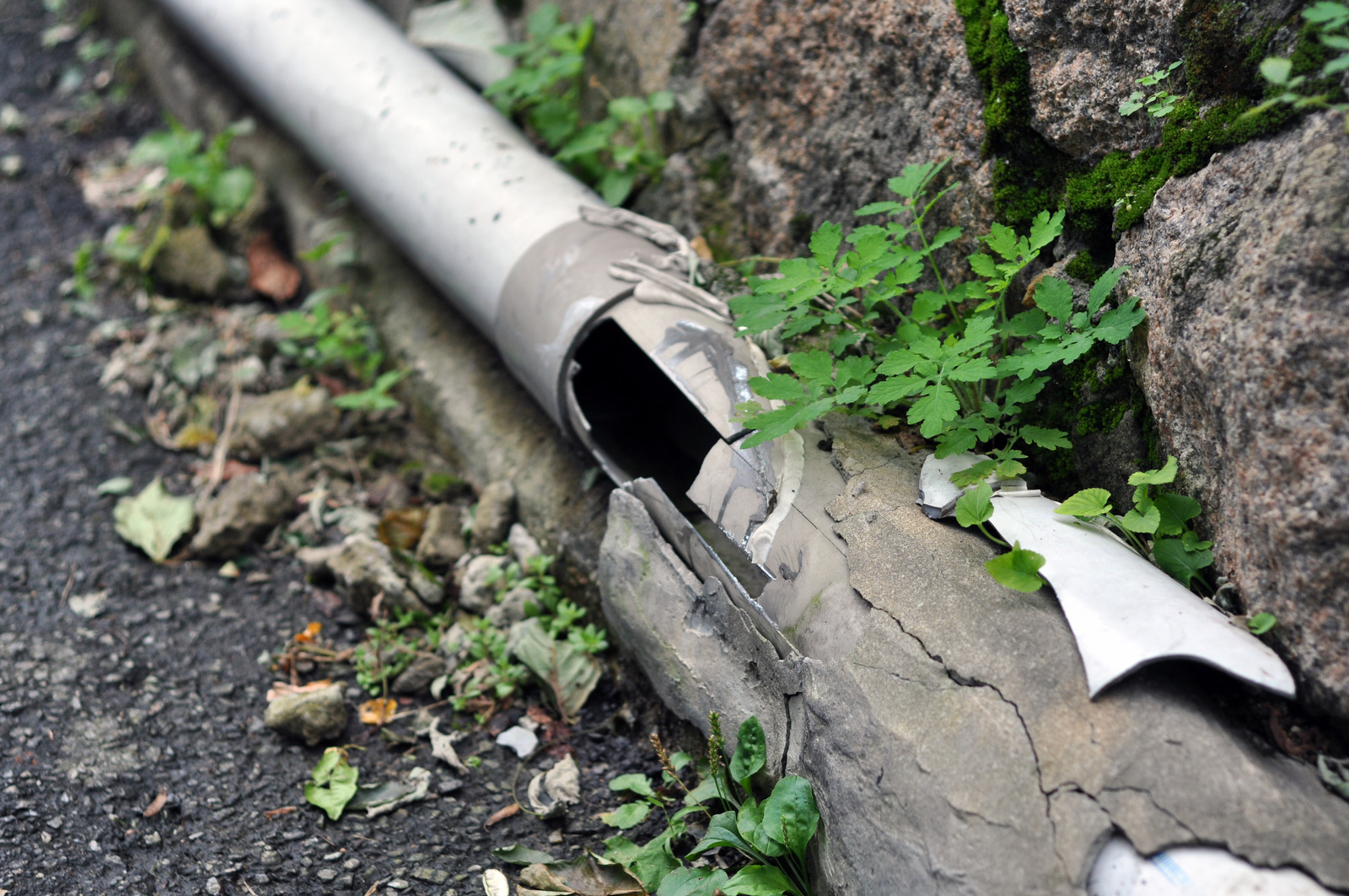
By this stage, the root mass inside the pipe is often substantial. And in clay or concrete pipes, the roots themselves have frequently expanded enough to crack or displace pipe sections. What started as roots growing in pipes becomes structural damage to the pipe itself that removing the roots doesn’t fix.
What a Camera Inspection Actually Shows
This is the most important diagnostic tool for root intrusion situations and worth understanding before deciding on a course of action.
A plumber feeding a camera into the sewer line sees the interior of the pipe in real time. Root intrusion is immediately visible, from the small feeder roots at early stages to the dense root mass at later stages. The camera also shows pipe condition, whether there are cracks, displaced sections, or collapsed areas that the roots have contributed to.
This information determines what the right response actually is. Roots that haven’t caused structural damage can be cut out mechanically. Roots that have cracked or displaced pipe sections mean the pipe itself needs repair or replacement beyond just clearing the roots.
Getting a camera inspection before deciding on treatment is worth the cost because it prevents spending money on mechanical root cutting for a pipe that needs replacement, or spending money on pipe replacement for a pipe that just needed clearing.
Mechanical Root Cutting: What It Does and Doesn’t Do
Mechanical root cutting, using a rotating cable with a cutting head to clear roots from the pipe, is the immediate solution for roots in pipe situations that haven’t caused structural damage.
It works. The roots get cut and the pipe opens up. Flow is restored.
The limitation is that it’s not a permanent solution. The roots don’t die from being cut inside the pipe. The root system is still there in the soil, still drawn to the same moisture and nutrients, and the roots will regrow from the cut ends. Most homeowners who have had roots cut from a sewer line find they need the same service every year or two as regrowth recurs.
Chemical treatments applied after mechanical cutting, specifically copper sulphate or sodium products designed to slow root regrowth, extend the interval between mechanical treatments. They don’t eliminate the need for periodic clearing but they reduce the frequency.
Pipe Lining as a Longer-Term Solution
For pipes that are in otherwise reasonable structural condition but have persistent root intrusion through their joints, pipe lining offers a solution that addresses the access problem more permanently.
Cured-in-place pipe lining installs a seamless resin-impregnated liner inside the existing pipe without excavation. The liner covers and seals the joints that roots were entering through. A properly installed liner eliminates the entry points, which means roots can no longer access the interior of the pipe even though the tree and its root system remain.
Pipe lining costs more than mechanical clearing but produces a result that doesn’t require annual maintenance for root control. For homeowners dealing with annual root clearing on an established tree root intrusion situation, the cost comparison over several years often favours lining.
When Pipe Replacement Is the Answer
Some situations have progressed beyond what lining or clearing can address.
Pipes that have been displaced by root pressure, where sections have moved out of alignment, can’t be effectively lined because the liner won’t bridge the displaced sections properly. Pipes with significant cracking or collapse need replacement rather than lining. And in some cases the sheer length and severity of root intrusion along a pipe run makes replacement more practical than multiple repair approaches.
Traditional excavation to expose and replace the damaged pipe section is the standard approach. Trenchless pipe replacement methods, which pull a new pipe through the existing pipe while breaking the old one outward, are available in situations where the pipe alignment allows it and can reduce the excavation involved.
Prevention: The Trees That Cause Problems
Not all trees are equally problematic for sewer lines. Root system characteristics vary significantly between species.
Trees with aggressive, water-seeking root systems are the highest risk. Willows are notorious and should never be planted near sewer lines. Poplars, cottonwoods, and silver maples have similarly aggressive root systems. Older elms have root systems that have had decades to develop and are a common cause of root intrusion in older Ottawa and Canadian neighbourhoods generally.
Trees with less aggressive root systems, ornamental varieties, many conifers, and smaller species, pose considerably less risk.
Distance from the sewer line matters but isn’t a reliable protection on its own. Tree roots will travel significant distances in search of moisture, and a tree planted well away from the sewer line can still reach it given enough time.
For new landscaping decisions, knowing the sewer line route and avoiding aggressive-rooted species along that route is practical prevention. For existing trees, knowing what’s already in the ground and having the sewer line inspected periodically is how to stay ahead of developing problems.
Roots in pipe situations develop slowly, give warning signs before becoming emergencies, and are manageable with the right approach at the right stage. Understanding how tree roots in sewer pipes develop, getting camera inspection before committing to a treatment approach, and addressing the problem at the root intrusion stage rather than waiting until structural damage compounds the problem, these are the decisions that separate a manageable plumbing situation from a major excavation project.
Frequently Asked Questions
How do I know if tree roots are in my sewer pipes without a camera inspection?
Recurring slow drains despite clearing, gurgling sounds from toilets when other fixtures drain, backups that happen during heavy use, and a history of annual drain clearing needs are all indicators of likely root intrusion. These symptoms aren’t definitive without camera inspection, but in older homes with mature trees, they’re reliable enough signals that a camera inspection is warranted before spending money on repeated clearing.
How often do roots in sewer pipes need to be cleared once the problem starts?
Without treatment to slow regrowth, most root intrusion situations require mechanical clearing every one to two years as roots regrow from cut ends. Chemical treatments applied after clearing can extend this interval somewhat. Pipe lining that eliminates the entry points is the only approach that addresses the regrowth problem at its source rather than managing it on an ongoing basis.
Can tree roots in sewer pipes cause pipe collapse?
Yes, in advanced cases. Root systems growing inside clay or concrete pipes can exert enough pressure to crack and eventually displace pipe sections. Ground movement around root systems also contributes to pipe displacement over time. A camera inspection shows whether root intrusion has progressed to the point of structural damage that requires pipe repair or replacement rather than just mechanical clearing of the roots themselves.
What’s the best way to prevent roots growing in pipes near established trees?
Annual or biennial camera inspection of the sewer line in older homes with established trees is the most practical prevention, catching root intrusion early when clearing is straightforward rather than when structural damage has occurred. Pipe lining eliminates root entry through joints for pipes that are otherwise sound. Chemical root growth inhibitor treatments applied periodically slow regrowth after mechanical clearing and can extend the interval between required service calls.