
It’s More Common Than You’d Think And Not Just for Emergencies
Most people assume bulk water delivery is a niche service. Something for farms, maybe. Or remote properties in the middle of nowhere with no other option. The reality is quite different. Bulk Water Delivery Ottawa covers a surprisingly wide range of situations from rural homeowners whose wells run dry in a hot summer to construction crews who need water on a site with no municipal hookup to businesses that maintain pools, ponds, or large storage tanks as part of their regular operations.
It’s not a last resort. For a lot of people and businesses in and around Ottawa, it’s simply how water gets where it needs to go. This post walks through who actually uses water hauling services in the Ottawa region, what the delivery process involves, how to think about volume and scheduling, and what situations planned or emergency make bulk delivery the most practical solution on the table.
Rural Properties and the Well Problem
- Ottawa’s rural fringe is large. Osgoode, Rideau-Rockcliffe, West Carleton these wards extend well beyond the urban core, and properties in those areas overwhelmingly rely on private wells rather than municipal water infrastructure. Wells work reliably most of the time. But they have limits.
- Drought conditions reduce water tables. Hot summers push residential demand higher precisely when aquifer levels are lowest. Older wells with lower yields can struggle to recover fast enough for normal household use particularly in homes that have added bathrooms, irrigation systems, or more occupants since the well was drilled.
- When a well runs low or fails entirely, rural water delivery Ottawa is often the fastest solution. A water truck delivery fills the property’s cistern or holding tank, restoring normal household function within hours rather than days. Some rural homeowners have scheduled cistern water delivery on a regular basis monthly or seasonally as a supplement to limited well yield, not as an emergency measure.
- Truth be told, residential water delivery in the Ottawa area is heavily concentrated in these rural pockets. Not because city residents don’t occasionally need it, but because the geography creates ongoing demand that urban properties with full municipal connections simply don’t have.
Construction Sites: A Consistent and Significant User
This is the less-discussed side of bulk water demand, but it’s substantial.
- Construction projects residential subdivisions, commercial builds, road and infrastructure work routinely require large volumes of water for purposes that have nothing to do with drinking. Dust suppression. Compaction of fill. Concrete mixing. Hydrostatic testing of new pipe installations. Temporary facilities for workers on sites without running water.
- Municipal hookups at construction sites either don’t exist yet or involve lengthy approvals. Construction site water supply through bulk delivery sidesteps that entirely. A water truck delivery arrives when scheduled, fills whatever temporary storage is on site, and work continues.
- For larger projects, large volume water delivery on a recurring schedule weekly or even daily during peak activity is standard practice. Site managers coordinate with commercial water transport providers to ensure supply is consistent and timed around project phases. Running out of water mid-pour, or having dust conditions halt work, is an avoidable cost.
- According to the Canada Mortgage and Housing Corporation, Ottawa-Gatineau consistently ranks among Canada’s most active residential construction markets. That volume of building activity translates directly into sustained demand for bulk water hauling across the region, particularly in areas where new development is outpacing infrastructure.
Emergency Situations: When the Timeline Compresses
Not every bulk water need is planned.
- Municipal water main breaks leave neighbourhoods without supply for hours or sometimes days. Private wells can fail without warning pump failures, contamination events, sudden yield drops following nearby drilling or blasting. Fires that draw down cistern or tank reserves. Flooding that compromises well integrity and makes the water inside it unsafe.
- Emergency bulk water services handle exactly these situations. The operational difference is speed; emergency water supply requests are typically prioritised and dispatched faster than scheduled fills, sometimes within a few hours depending on the provider and distance.
- For properties with existing storage a cistern, a bladder tank, an above-ground holding tank, water tank filling services can restore normal function quickly. Properties without dedicated storage have fewer options, which is one reason emergency preparedness advice for rural Ontario properties consistently recommends maintaining some form of reserve capacity.
- Ottawa winters add another dimension. Extended cold snaps can freeze water lines, including supply lines from wells to homes. Emergency water supply in January is a different logistical challenge than a summer drought but it’s a genuine scenario that Ottawa-area providers manage each year.
Pools, Ponds, and Specialty Fills
This category tends to surprise people.
- Filling a large in-ground pool from a residential tap connection takes a very long time, draws down pressure for everything else in the house, and in properties on well water risks depleting the aquifer. Potable water delivery or non-potable water delivery (depending on the intended use) through a bulk service fills a standard residential pool in a single visit. Most operators carry between 18,000 and 23,000 litres per load, and a typical residential pool in that range is filled in one or two deliveries.
- Ornamental ponds, reflecting pools, water features on commercial or estate properties use the same logic. Large volume, one-time or annual fill, water quality requirements that vary depending on whether fish or plants are involved.
- Agricultural users represent another segment. Livestock watering systems, irrigation ponds, and spray applications all draw on fresh water transport services when on-site supply is insufficient or when establishing a new operation before permanent infrastructure is in place.
- Hot tub fills. Fire suppression pond maintenance. Ice rink flooding for outdoor recreational facilities. The list of water hauling services applications in the Ottawa region is genuinely broader than most first-time callers expect.
Scheduling, Volume, and What to Expect
For first-time users, the process is straightforward.
- Most bulk water hauling providers in Ottawa serve both scheduled and on-demand requests. Scheduled deliveries a fixed fill every month, every quarter, or at the start of each season — suit properties that maintain ongoing storage needs. On-demand works for one-off requirements: pool fills, emergency top-ups, construction site deliveries.
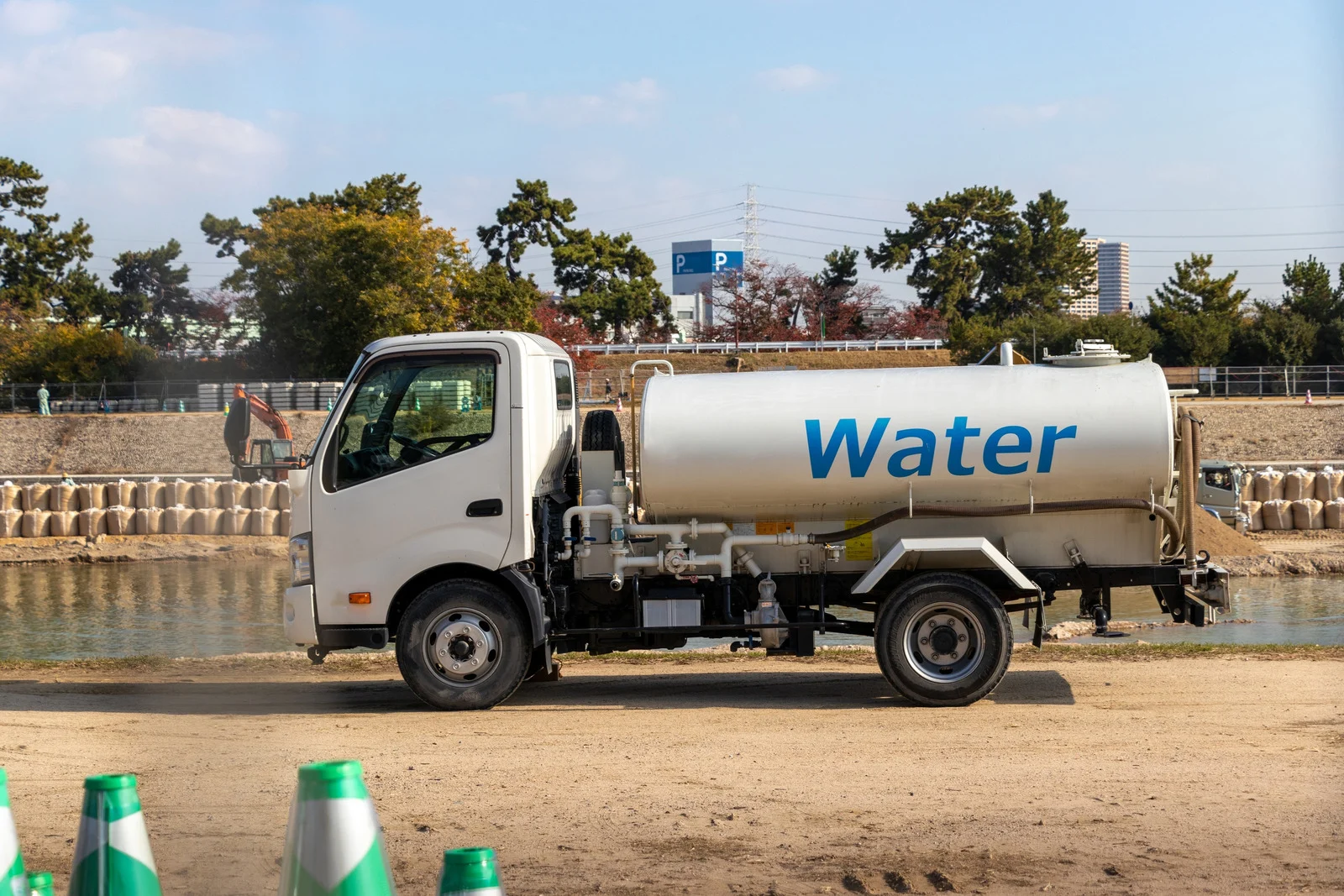
- Volume is usually quoted in litres or gallons, and delivery trucks in the Ottawa market typically carry between 18,000 and 23,000 litres per load. Larger commercial or industrial requirements may involve multiple loads sequenced across a day or scheduled on consecutive days.
- Access matters. Water truck delivery vehicles are large. Properties with narrow laneways, low-clearance obstacles, or soft ground need to flag those conditions when booking — most providers will ask, and some require a site visit for unusual access situations before confirming a delivery.
- Water quality varies by use case. Potable water delivery water safe for drinking, cooking, and domestic use is certified and priced accordingly. Non-potable water for dust suppression, concrete mixing, or irrigation is typically less expensive. Being clear about intended use when booking ensures the right product arrives.
- Year-round availability is standard for established Ottawa providers. Winter deliveries require additional planning, frozen ground conditions, access challenges, and timing around extreme cold but emergency bulk water services operate in January the same as July. The region’s climate is well understood by local operators.
Frequently Asked Questions
How does bulk water delivery work in Ottawa?
A water truck delivery vehicle arrives at the property at the scheduled time and pumps water directly into an existing cistern, holding tank, pool, or other storage. Water hauling services in Ottawa operate for both residential and commercial clients. Delivery is booked by volume, and providers typically carry between 18,000 and 23,000 litres per load, with multiple deliveries available for larger requirements.
Can businesses schedule recurring water deliveries?
Yes. Commercial water transport providers in Ottawa offer scheduled recurring deliveries for businesses with ongoing water supply needs construction sites, agricultural operations, facilities with large storage systems, and properties without municipal connection. Frequency can be weekly, monthly, or seasonal depending on volume requirements. Large volume water delivery on a contracted schedule is standard practice for many commercial clients in the region.
Can water be delivered to rural properties in Ottawa?
Absolutely. Rural water delivery Ottawa is one of the primary use cases for bulk water services in the region. Properties in West Carleton, Osgoode, Rideau-Rockcliffe, and surrounding rural wards rely on cistern water delivery to supplement or replace private well supply. Established providers service rural addresses regularly, though access conditions and road quality should be confirmed when booking, particularly in winter months.
How quickly can emergency water be delivered?
Response times for emergency bulk water services in Ottawa vary by provider and current demand, but many operators can dispatch within a few hours for urgent residential or commercial situations. Emergency water supply requests are typically prioritised over scheduled fills. Having basic information ready property address, access details, tank or cistern capacity speeds up the booking and dispatch process significantly.